
Occupational Therapy
Skills for everyday independence
Occupational therapy is an evidence based intervention that helps children take part in the everyday activities of life, delivered by a highly trained Occupational Therapist (OT).
- Who it is for
- Children with physical, sensory or cognitive differences who need support with movement, self care, play, attention or sensory processing.
- Fee
- Contact us for fees
Overview
Helping children do the things they want and need to do
Occupational therapy is a therapeutic, evidence based intervention that increases children's skills in accessing the activities of their everyday lives. It is delivered by a highly trained professional, an Occupational Therapist (OT).
Treatment supports children with physical, sensory or cognitive differences to be as independent as possible in every part of their lives. Our occupational therapists help children improve their cognitive, physical, sensory and motor skills, and grow in self confidence and motivation.

Skills we build
Our occupational therapists help children develop
Through personalised and group interventions.
- Fine motor skills
- Gross motor skills
- Self regulation skills
- Attention and positioning for table top work
- Seating and posture support
- Cognitive skills for problem solving and completing schoolwork
- Play skills
- Social skills
- Safe swallowing
- Daily living: eating, drinking, washing, dressing, toilet training and self management
Sensory integration therapy
When the senses feel too much, or not enough
We combine our senses, sight, sound, smell, touch, taste, balance and the sense of our body in space, to make sense of the world around us. Some autistic children find it hard to filter sensory information, and it can become overwhelming, uncomfortable or even painful.
On the other hand, some children actively seek sensory experiences to calm themselves, ease anxiety, or simply for pleasure and relaxation. Experiencing sensory input differently from others is known as a sensory processing difference.
Without the filters to screen out less important information, input can build and build until it leads to sensory overload or a meltdown. As one student put it, "I cannot keep reading because my eyes are filled up at the moment."
Occupational therapists give advice and interventions that target each sense, helping a child's nervous system become more organised and regulated. This can reduce anxiety and exhaustion, and improve attention and performance.
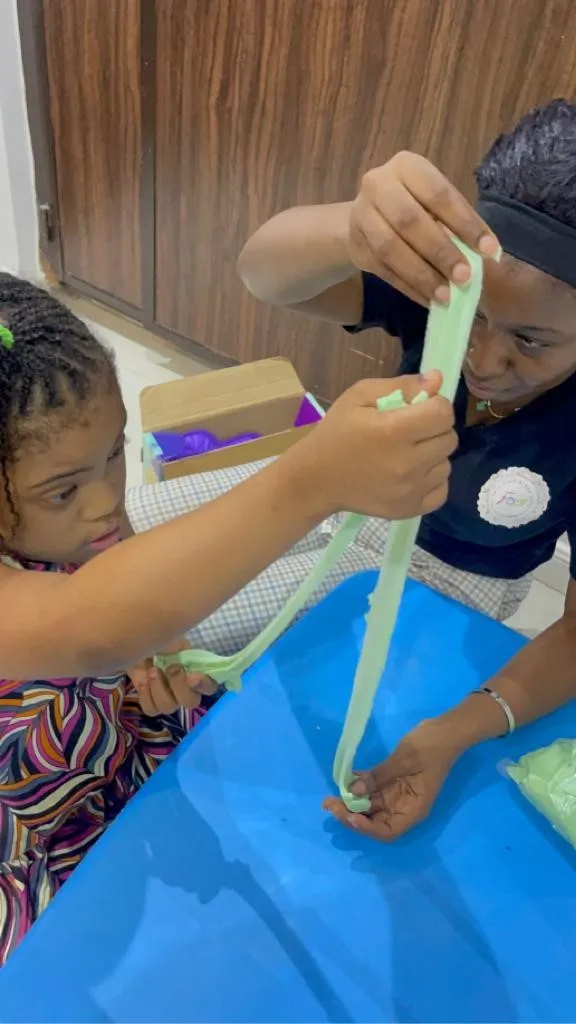
Sensory support plans
Sensory diets and sensory circuits
-
Sensory diets
A sensory diet is a specially designed daily activity plan. It builds sensory activities into your child's whole day to improve focus and attention, and help them feel "just right" and regulated. Just as the body needs food spread through the day, it also needs activities to keep its alertness at the right level. Our occupational therapist designs an effective sensory diet for each child to follow throughout the day, to improve wellbeing and quality of life.
-
Sensory circuits
A sensory circuit is a short series of sensory motor activities that helps children reach a "ready to learn" state. Fidgeting, poor concentration, lots of physical contact or tiredness can all be signs that a child is finding it hard to connect with learning. Circuits wake up all the senses, and are a great way to energise or settle children into the day. Our occupational therapist recommends a specific circuit for each child.
Participation in a short sensory motor circuit prepares children to engage effectively with the day ahead. (Horwood, 2009)
Help your child feel just right
Book a consultation and ask about an occupational therapy and sensory assessment.